Leonardo DiCaprio Net Worth 2026 — How Oscar Gold and Environmental Activism Built a $260 Million Powerhouse
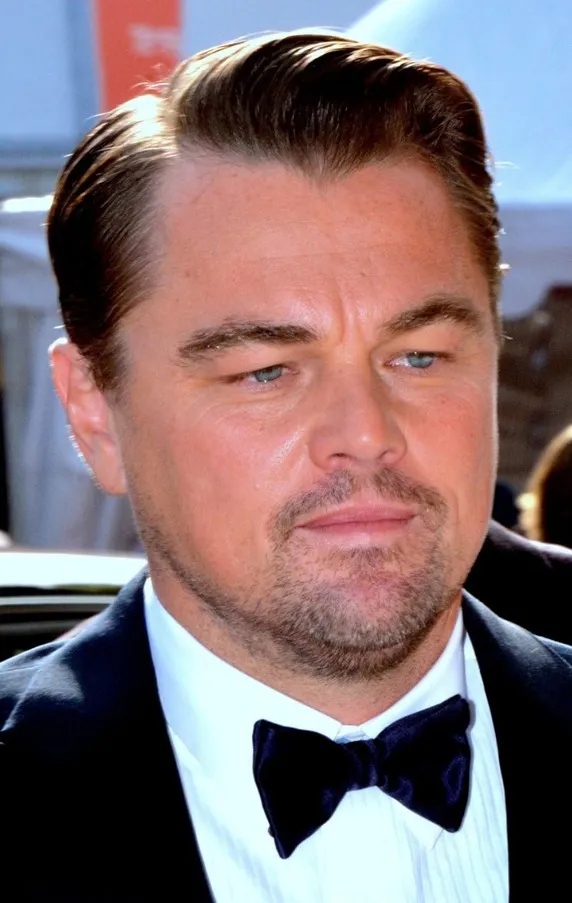
Photo: Georges Biard, CC BY-SA 3.0, via Wikimedia Commons
In an industry where celebrity fortunes rise and fall with box office tides, Leonardo DiCaprio has constructed something considerably more durable: a $260 million financial empire anchored by artistic selectivity, production ownership, and a global environmental brand that has paradoxically made him more commercially valuable with every passing year. At 51, DiCaprio is not merely an actor — he is a carefully managed cultural institution.
From Child Actor to A-List Architect
DiCaprio's financial story begins long before Titanic. Born in Los Angeles in 1974, he broke into television via Growing Pains before earning his first Oscar nomination for What's Eating Gilbert Grape in 1993. Those early years generated modest income by Hollywood standards, but they established something more valuable than a paycheck: credibility. By the mid-1990s, DiCaprio was already being positioned as the industry's most promising dramatic talent.
Then came Titanic in 1997. James Cameron's $200 million epic grossed more than $2.1 billion worldwide on its original release — a figure that ballooned past $2.2 billion following a 3D re-release in 2012. DiCaprio's base salary for the film was reportedly $2.5 million, but backend participation tied to the film's extraordinary performance elevated his total earnings from that single project into the tens of millions. More critically, Titanic transformed him from a promising young actor into a global superstar whose name alone could open a film in every major market.
The $20 Million Club and Strategic Scarcity
What distinguishes DiCaprio's earning strategy from nearly every peer is his deliberate approach to scarcity. Where other A-listers accept four or five projects annually, DiCaprio has historically averaged fewer than two theatrical releases per year. That restraint has allowed him to command — and sustain — salaries in the $20 million to $25 million range for decades.
Inception (2010), Django Unchained (2012), The Wolf of Wall Street (2013), The Revenant (2015), and Once Upon a Time in Hollywood (2019) each generated base salaries in that tier, with backend arrangements on several projects pushing total compensation significantly higher. The Wolf of Wall Street, which DiCaprio also produced, reportedly earned him north of $25 million when profit participation was factored in. Don't Look Up (2021), his Netflix collaboration with Adam McKay, commanded a reported $30 million flat fee — a figure that reflected both his market value and the streaming platform's willingness to pay premium rates for established names.
Industry analysts estimate DiCaprio's cumulative acting earnings across his career exceed $300 million in gross compensation, though taxes, agency fees, and overhead reduce his net take substantially.
Appian Way Productions: The Ownership Layer
Perhaps the most underappreciated component of DiCaprio's wealth is Appian Way Productions, his production company founded in 2004. The venture has co-produced or produced a significant portion of his own films, ensuring DiCaprio participates in profits rather than simply collecting a salary. Beyond his personal projects, Appian Way has developed documentary content — most notably the acclaimed environmental series Before the Flood — and optioned numerous literary properties.
The production model allows DiCaprio to generate revenue from projects in which he does not appear on screen, diversifying his income beyond his acting fees. While Appian Way's precise annual revenues are not publicly disclosed, entertainment finance professionals estimate the company contributes meaningfully to DiCaprio's annual income, particularly in years when his acting output is limited.
Environmental Advocacy as Brand Amplification
It would be reductive to frame DiCaprio's environmental work purely through a financial lens — his commitment to climate causes predates any commercial benefit by years. Nevertheless, the financial reality is clear: his advocacy has substantially enhanced his brand value among the demographic cohorts — younger, globally minded, socially conscious consumers — that advertisers and corporate partners most aggressively pursue.
The Leonardo DiCaprio Foundation, established in 1998, has distributed more than $100 million in grants to environmental organizations worldwide. That philanthropic footprint has generated enormous goodwill, media coverage, and institutional credibility that translates directly into brand partnership opportunities. His association with causes rather than consumer products has, counterintuitively, made him more attractive to premium brands seeking authentic alignment. Endorsement and partnership income, while modest compared to peers who pursue commercial deals more aggressively, still contributes an estimated $5 million to $10 million annually to his earnings.
Real Estate: A $50 Million Portfolio
DiCaprio has been an active real estate investor for more than two decades. His holdings have included a compound in Los Feliz, California, a beachfront property in Malibu, and multiple international acquisitions. He purchased Blackadore Caye, a private island off the coast of Belize, with plans to develop it as an eco-friendly resort — a project that has faced logistical delays but represents both a financial investment and a brand-consistent environmental statement. His domestic real estate portfolio alone is estimated to be worth in excess of $50 million at current market valuations.
Recent Projects and the Road Ahead
DiCaprio's 2026 slate reflects the same curatorial discipline that has defined his career. His collaboration with director Martin Scorsese — a partnership that has yielded five films and enormous commercial returns — continues to be a focal point of his professional calendar. Upcoming projects in development through Appian Way signal continued investment in prestige-level content that commands premium compensation.
With an estimated net worth of $260 million, DiCaprio occupies a rarefied position: an actor whose financial standing is insulated from the volatility of any single project by the diversity of his income streams, the strength of his brand, and the strategic patience that has defined every major career decision he has made.
In Hollywood, longevity is the ultimate luxury. DiCaprio has purchased it deliberately — and at considerable profit.