Arnold Schwarzenegger Net Worth 2026 — How the Austrian Oak Built a $450 Million American Empire
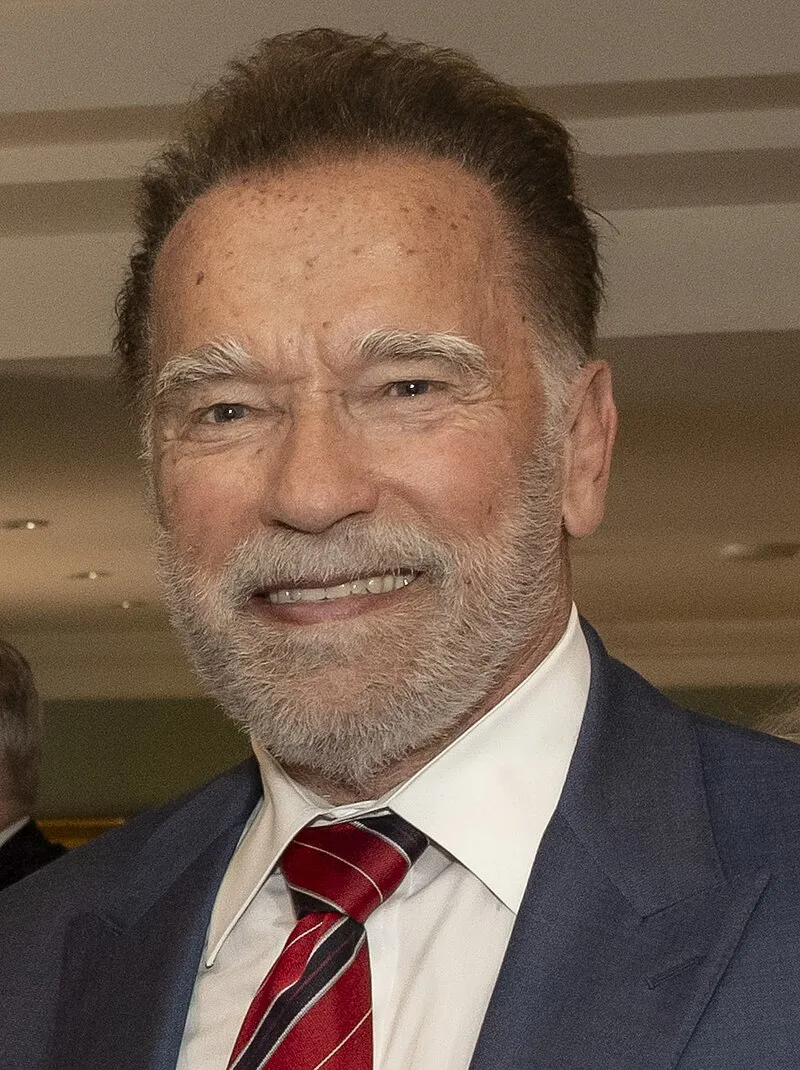
Photo of Arnold Schwarzenegger, via Wikimedia Commons
Arnold Schwarzenegger's estimated net worth in 2026 sits at approximately $450 million, a figure that reflects not one career but five: competitive bodybuilder, real estate investor, Hollywood action icon, elected politician, and post-gubernatorial entrepreneur. The Austrian-born superstar arrived in the United States in 1968 with virtually nothing, and what he constructed over the following five decades represents one of the most methodical wealth-building narratives in American celebrity history.
From Graz to Gold: The Bodybuilding Foundation
Long before Schwarzenegger collected a single Hollywood paycheck, he was generating income through bodybuilding competition and, more importantly, through the business relationships those victories enabled. His seven Mr. Olympia titles — won between 1970 and 1980 — gave him a platform that he monetized with unusual sophistication for an athlete of that era. He opened a bricklaying business in Los Angeles with fellow bodybuilder Franco Columbu, a venture that capitalized on post-earthquake construction demand in California during the early 1970s.
The real estate instincts he developed during those early years proved foundational. Using prize money and small business profits, Schwarzenegger began acquiring residential and commercial properties in the Santa Monica area before his film career had fully ignited. Financial analysts who have studied his portfolio estimate that his California real estate holdings alone — accumulated over more than four decades — are now worth in excess of $100 million.
The Terminator Effect: Hollywood's Most Transformative Franchise Deal
The 1984 release of The Terminator changed everything. Schwarzenegger's reported salary for the original film was a modest $75,000, a figure that reflects his limited Hollywood leverage at the time. What followed, however, was a masterclass in franchise negotiation. By the time Terminator 2: Judgment Day arrived in 1991, he commanded a salary of approximately $15 million plus backend participation — one of the largest per-film paydays in Hollywood history at that point.
His peak earning years through the late 1980s and 1990s placed him among the highest-paid actors on the planet. Predator (1987), Total Recall (1990), True Lies (1994), and Batman & Robin (1997) each added to a cumulative film earnings total that industry analysts estimate at well over $200 million across his theatrical career. His reported $30 million salary for Batman & Robin alone remains one of the most cited examples of peak Hollywood star power compensation.
Critically, Schwarzenegger used his box office leverage to negotiate not merely for upfront fees but for profit participation, deferred compensation structures, and — in select cases — production credits that entitled him to a share of long-tail ancillary revenues including home video, licensing, and international distribution.
Real Estate: The Invisible Fortune
While his film earnings generated headlines, Schwarzenegger's real estate portfolio quietly became the bedrock of his financial security. His holdings have included apartment complexes in Los Angeles, commercial properties in Santa Monica's high-value retail corridor, and industrial warehouse assets. Reports from the mid-2000s indicated that his real estate income was generating rental revenues of $20 million or more annually, providing a cash-flow foundation entirely independent of his entertainment earnings.
This diversification proved prescient. When Schwarzenegger stepped away from acting to serve as California's Governor from 2003 to 2011 — a position he held at a nominal $1 annual salary — his real estate portfolio continued compounding in value while his film income effectively paused.
The Governor Years: Political Capital and Its Financial Aftermath
Schwarzenegger's two terms as California's 38th Governor were, by design, financially costly in the short term. He declined his gubernatorial salary and absorbed substantial personal costs associated with the role. However, the political tenure generated a different form of capital: global credibility, bipartisan respect, and a public profile that transcended entertainment celebrity.
Following his return to private life in 2011, Schwarzenegger leveraged that profile into speaking engagements commanding fees reported at $150,000 to $300,000 per appearance, brand partnerships, and a renewed film career. His return to the Terminator franchise with Terminator Genisys (2015) and Terminator: Dark Fate (2019) — combined with roles in The Expendables series — demonstrated that his commercial value had survived the political interlude.
Business Ventures and Brand Partnerships
Beyond real estate and film, Schwarzenegger has pursued a range of business interests with varying degrees of visibility. His stake in Planet Hollywood, the restaurant chain he co-founded with Sylvester Stallone and Bruce Willis in the early 1990s, was ultimately a cautionary tale — the company filed for bankruptcy twice — but it represented an early instinct toward brand extension that he refined over time.
More recently, his environmental advocacy work through the R20 Regions of Climate Action initiative and his involvement with electric vehicle promotion have aligned him with corporate sponsors and institutional partners in ways that carry financial benefit. His social media presence, which commands tens of millions of followers across platforms, has become a monetizable asset in its own right, with sponsored content and brand collaborations contributing meaningfully to annual income.
The Outlook for 2026
At 78, Schwarzenegger remains one of the most financially active celebrities of his generation. His Netflix series FUBAR, which premiered in 2023 and returned for subsequent seasons, demonstrated that streaming platforms are willing to pay significant fees for his continued involvement in original content — reports suggest his Netflix deal is worth $30 million or more across the project's run.
With a real estate portfolio appreciating in one of the world's most supply-constrained markets, ongoing franchise residuals, and a global brand that shows no meaningful signs of erosion, his $450 million fortune appears structurally sound. The Austrian Oak's story is, at its core, a study in what happens when elite physical discipline is applied not merely to athletic competition but to the long game of wealth construction.