Adam Driver Net Worth 2026 — How a Marine-Turned-Juilliard Graduate Built a $30 Million Fortune on His Own Terms
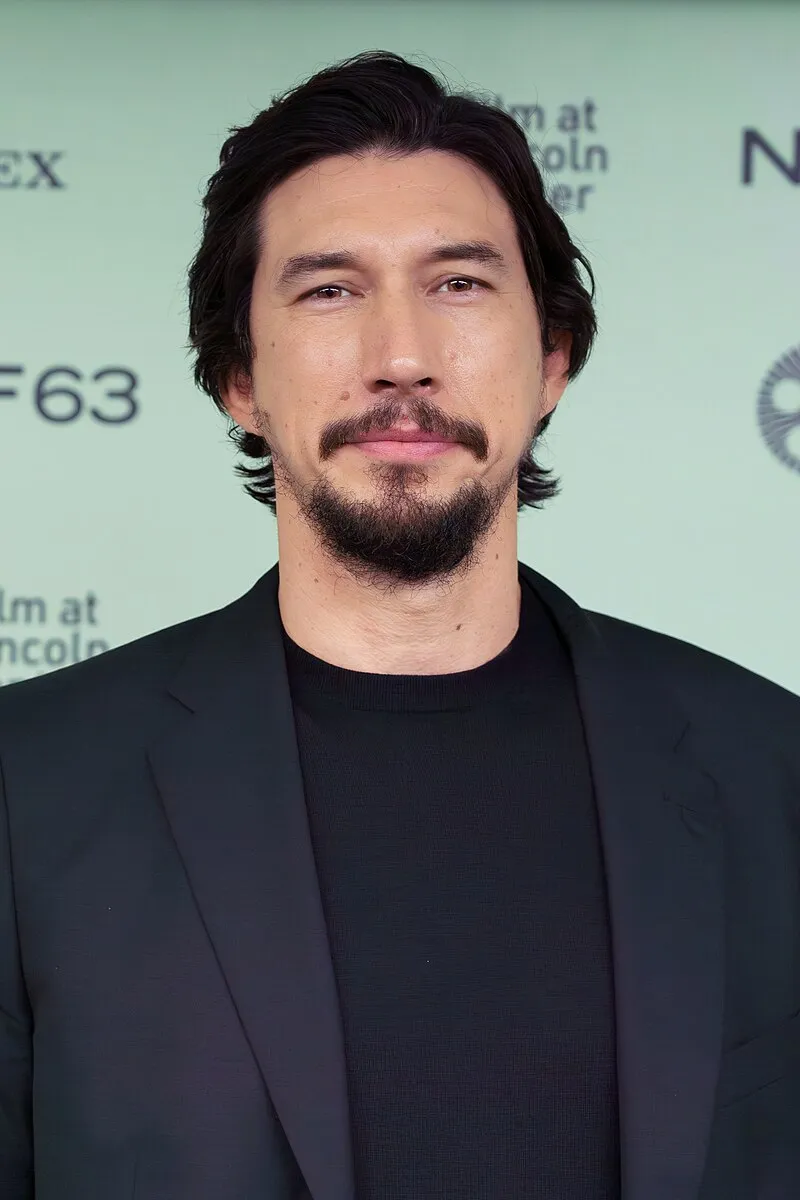
Photo of Adam Driver, via Wikimedia Commons
In an industry that rewards spectacle above almost everything else, Adam Driver has built a $30 million fortune by doing the opposite. His net worth — estimated by industry analysts at between $25 million and $35 million heading into 2026 — is the product of a career philosophy that is almost singular in contemporary Hollywood: accept the franchise paycheck, then immediately reinvest the credibility in work that defies easy categorization.
 Photo: Adam Driver, via static01.nyt.com
The result is a wealth profile that is both financially sound and critically bulletproof, a combination that very few actors of his generation have managed to achieve.
From Mishawaka to the Marine Corps to Manhattan
Driver's biography reads less like a Hollywood origin story and more like a character study from one of the prestige films he would later inhabit. Born in San Diego in 1983 and raised in Mishawaka, Indiana, he enlisted in the United States Marine Corps following the September 11 attacks, serving with the 1st Battalion, 1st Marines before a mountain biking injury led to a medical discharge prior to deployment.
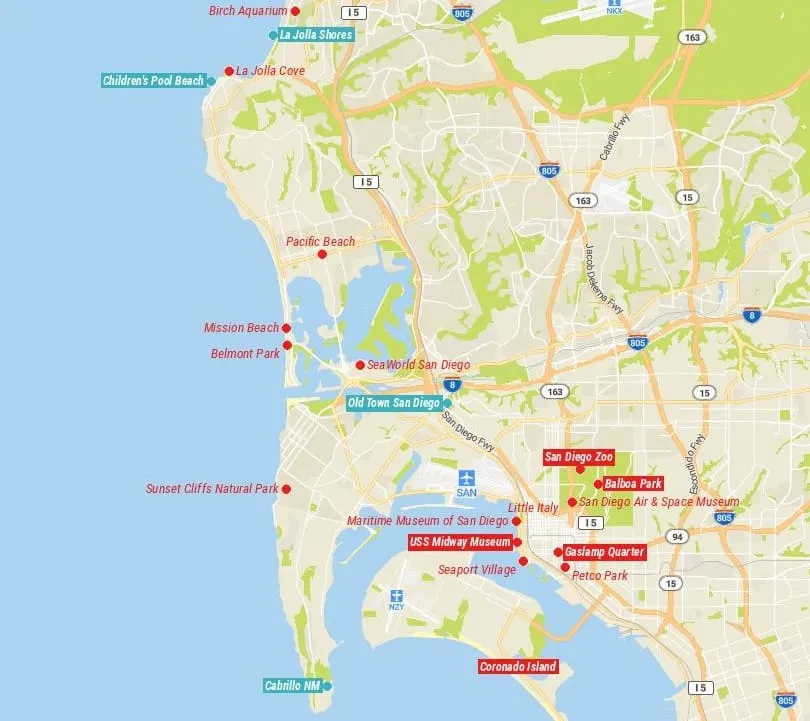 Photo: San Diego, via www.tripkrt.com
The pivot from military service to acting was not a calculated career move — it was, by Driver's own account, a search for community and purpose that the Marines had provided. He applied to Juilliard on something of an impulse, was accepted to the prestigious drama conservatory's Class of 2009, and emerged as one of the most technically rigorous actors of his cohort.
Those early years in New York were lean by any financial measure. Small theater roles and modest television appearances defined his income through the early 2010s, with his net worth at that stage amounting to little more than the promise of future earnings.
Girls and the HBO Platform
The turning point arrived in 2012, when Lena Dunham cast Driver as Adam Sackler in HBO's Girls. The role — a volatile, emotionally complex romantic lead — became one of the defining supporting performances of the decade's early prestige television era. HBO salaries for recurring cast members at that tier typically range from $30,000 to $75,000 per episode; Driver's compensation across six seasons represented his first meaningful accumulation of wealth, while simultaneously positioning him as one of the most compelling character actors working in the medium.
Critically, Girls did something that money alone could not buy: it established Driver's reputation for inhabiting difficult, unconventional characters without vanity — a reputation that would become the foundation of every major financial opportunity that followed.
The Star Wars Windfall
In 2015, Driver was cast as Kylo Ren in Star Wars: The Force Awakens, a decision that fundamentally altered his financial trajectory. The sequel trilogy — spanning The Force Awakens (2015), The Last Jedi (2017), and The Rise of Skywalker (2019) — collectively grossed over $4 billion at the global box office, making it one of the most commercially successful franchises in cinema history.
While the specific terms of Driver's Disney contract have not been publicly disclosed, industry compensation benchmarks for a character of Kylo Ren's prominence in a franchise of this scale suggest cumulative earnings from the three films in the range of $10 million to $15 million, inclusive of backend participation provisions that are standard in major studio franchise agreements. That figure alone accounts for the majority of his current net worth.
Significantly, Driver used the franchise's cultural gravity as a platform rather than a ceiling. Rather than consolidating his identity around the Star Wars brand, he immediately pivoted toward some of the most demanding independent work available.
Prestige Film Earnings and Critical Capital
Noah Baumbach's Marriage Story (2019) earned Driver his first Academy Award nomination for Best Actor and stands as the artistic centerpiece of his post-Star Wars career. Independent drama productions of that tier typically compensate leading actors in the $1 million to $3 million range, with Netflix's acquisition budget for the film ensuring competitive rates. The Oscar nomination, however, delivered something more durable than a single payday — it permanently elevated his asking price across all future projects.
House of Gucci (2021), directed by Ridley Scott, placed Driver opposite Lady Gaga in a major studio production with a reported budget exceeding $75 million. His fee for that production is estimated in the $5 million range. Ferrari (2023), Michael Mann's biographical drama in which Driver portrayed Enzo Ferrari, represented another significant studio commitment, with compensation estimates in a similar bracket.
Annette (2021), the avant-garde musical directed by Leos Carax, and White Noise (2022), Baumbach's adaptation of Don DeLillo's novel, reinforced Driver's position in the prestige film ecosystem — projects that may not generate blockbuster fees but sustain the critical credibility that justifies his premium asking price on larger productions.
Endorsements: The Burberry Factor
Driver's endorsement portfolio is deliberately restrained compared to peers of equivalent fame. His most prominent commercial relationship is with Burberry, the British luxury fashion house, for which he has served as a brand ambassador. Luxury fashion endorsement deals at this tier — for a globally recognized actor with strong demographic appeal among younger affluent consumers — typically carry annual values in the range of $1 million to $3 million.
Driver has largely avoided the saturated celebrity endorsement marketplace, a choice consistent with his broader brand positioning. The selectivity itself has value: scarcity in the endorsement space preserves the sense of authenticity that makes his Burberry association credible to the label's target consumer.
Arts in the Armed Forces: The Nonprofit Dimension
One of the most distinctive elements of Driver's public profile is his founding of Arts in the Armed Forces (AITAF), a nonprofit organization that brings professional theater performances to active-duty military personnel, veterans, and their families. Driver established the organization in 2006, drawing directly on his own experience navigating the transition from military service to civilian creative life.
While AITAF does not represent a revenue stream, its existence speaks directly to Driver's financial philosophy. The organization has received significant philanthropic support and has expanded its programming substantially over the past decade. Driver's commitment to the nonprofit — which he continues to champion publicly — functions as a form of brand equity that distinguishes him from peers who might otherwise occupy the same market position.
Real Estate and Asset Profile
Driver and his wife, actress Joanne Tucker, have maintained a relatively private financial life. The couple owns property in Brooklyn, New York, consistent with Driver's longstanding professional and personal ties to the city's theater community. Real estate holdings at the level consistent with his income profile suggest property values in the $3 million to $5 million range, though specific transaction details have not been publicly reported.
Looking Ahead to 2026 and Beyond
Heading into 2026, Driver's project slate reflects the same strategic balance that has defined his career to date. With several productions in various stages of development and his market position firmly established in both the franchise and prestige film sectors, his earning trajectory points consistently upward.
At an estimated net worth of $30 million, Adam Driver occupies a financial position that is modest by the standards of his most commercially successful contemporaries — but one that is built on a foundation of remarkable durability. In Hollywood, where careers are routinely derailed by overexposure, typecasting, or a single catastrophic box office failure, the architecture of Driver's wealth may prove to be its greatest asset.