Christopher Walken's $50 Million Fortune: How Dancing and Danger Built Hollywood's Most Distinctive Career
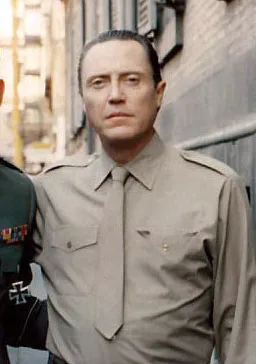
Christopher Walken stands as one of Hollywood's most enigmatic figures, having transformed his unique screen presence into an estimated $50 million fortune over five remarkable decades. From his early days as a Broadway dancer to becoming cinema's most quotable villain, Walken's financial success stems from an unwavering commitment to memorable, often unsettling performances that have made him indispensable to filmmakers worldwide.
The Foundation: Broadway Beginnings and Early Television
Born Ronald Walken in Queens, New York, the future star began his entertainment career as a dancer, training at the Professional Children's School alongside future stars like Liza Minnelli. His Broadway debut in "Best Foot Forward" in 1963 established the foundation for what would become a uniquely diverse career portfolio. These early theatrical earnings, while modest by today's standards, provided Walken with the financial stability to pursue increasingly ambitious projects.
Walken's transition to television in the late 1960s marked his first substantial paychecks, with appearances on shows like "The Wonderful John Acton" and various anthology series. Industry insiders estimate these early TV roles generated between $5,000-$15,000 per appearance, significant money for a young actor in that era.
The Breakthrough: Academy Award Recognition and Career Acceleration
The pivotal moment in Walken's wealth accumulation came with his Oscar-winning performance in "The Deer Hunter" (1978). This career-defining role not only earned him critical acclaim but also positioned him as a serious dramatic actor capable of commanding higher salaries. The film's success reportedly earned Walken his first six-figure payday and opened doors to premium Hollywood projects.
Following his Oscar win, Walken's asking price increased dramatically. Throughout the 1980s, he consistently earned between $500,000 and $1 million per film, a substantial sum that reflected his growing reputation as a versatile performer willing to tackle challenging roles that other actors might avoid.
The Villain Premium: Capitalizing on Memorable Antagonists
Walken's financial breakthrough came from embracing villainous roles that showcased his distinctive delivery and unsettling screen presence. His performance as the psychopathic Max Zorin in "A View to a Kill" (1985) reportedly earned him $2 million, establishing a pattern where Walken could command premium rates for memorable antagonist roles.
The 1990s proved particularly lucrative, with standout performances in "Batman Returns" (1992) as the Penguin and "Pulp Fiction" (1994) generating substantial paychecks. Industry sources suggest Walken earned $3 million for his Batman villain turn, while his iconic Captain Koons role in Tarantino's masterpiece, though a smaller part, reinforced his value as a scene-stealing character actor.
Modern Era Earnings: Sustained Success and Franchise Power
Walken's ability to remain financially relevant well into his 70s and 80s demonstrates remarkable career longevity. His recent appearances in high-profile projects like "Hairspray" (2007), where he showcased his dancing background, and "Batman Returns" have kept his market value strong. Entertainment industry analysts estimate Walken has commanded between $1-3 million per major film role throughout the 2000s and 2010s.
His willingness to appear in both blockbusters and independent films has created multiple revenue streams. While tentpole films provide substantial upfront payments, smaller projects often include profit-sharing arrangements that continue generating income years after release.
Television Renaissance and Streaming Success
The streaming era has proved financially beneficial for Walken, with platforms like Netflix and HBO paying premium rates for established talent. His appearances in various limited series and television movies have reportedly earned him between $100,000-$300,000 per episode, depending on the production's budget and his role's prominence.
Real Estate and Investment Portfolio
Walken's financial acumen extends beyond acting income. He and his wife Georgianne have maintained a relatively modest lifestyle compared to many Hollywood stars, owning properties in Connecticut and New York. Their primary residence, a farmhouse in rural Connecticut, represents both a lifestyle choice and a solid real estate investment that has appreciated significantly over their decades of ownership.
Unlike many celebrities, Walken has avoided high-profile business ventures, instead focusing on steady real estate investments and traditional portfolio management. This conservative approach has helped preserve his wealth while avoiding the financial pitfalls that have affected other stars of his generation.
The Walken Brand: Licensing and Residual Income
Walken's distinctive voice and mannerisms have become cultural touchstones, generating ongoing revenue through various licensing deals and residual payments. His memorable performances continue earning money through television reruns, streaming royalties, and international distribution deals.
The actor's famous "More Cowbell" Saturday Night Live sketch has become a cultural phenomenon, leading to merchandise opportunities and keeping Walken relevant with younger audiences who discover his work through social media and streaming platforms.
Legacy Earnings and Future Projections
At 80, Walken continues working steadily, with recent projects demonstrating his enduring appeal to filmmakers and audiences. His estimated $50 million net worth reflects not just past earnings but also the ongoing value of his extensive filmography and distinctive brand.
Industry experts predict Walken's estate will continue generating substantial income long after his retirement, thanks to his iconic performances and the enduring popularity of films like "Pulp Fiction," "The Deer Hunter," and "Batman Returns." His unique position in Hollywood history ensures his financial legacy will remain as distinctive as his unforgettable performances.